Today’s Sponsor:
Wall Street analysts are issuing rare downgrades and sell ratings on 20 stocks right now — do you own any of them? When top analysts consistently rate a stock "hold" or "sell," there's a serious problem, and the window to act may be closing fast.
MarketBeat has identified the 20 companies with the lowest analyst recommendations over the last 12 months and compiled them into a FREE report: "20 Stocks to Sell Now." For a limited time, you can claim your copy at no cost.
Get Your Free Report NowBy clicking the button above, you will receive this free report and a free subscription to MarketBeat's daily email newsletter. You are also agreeing to the terms of our privacy policy. Unsubscribe at any time.

Friday, November 13, 2026: The FAA ordered a nationwide ground stop, Microsoft outage tests workplace dependency, United draws a line on AI agents, China pushes back on U.S. chip curbs, Indonesia’s security state shows cracks, and U.S. envoys shuttle between Putin and Zelenskyy.
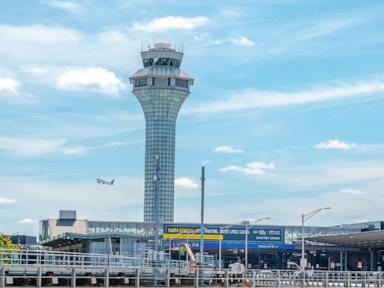
Image via ABC News
FAA Orders Nationwide Ground Stop, Halting Departures Across the U.S.
The Federal Aviation Administration ordered a nationwide ground stop Friday, directing all airlines to pause departures across U.S. airports. The FAA cited extraordinary circumstances and said the move was for reasons of safety.
A ground stop doesn’t automatically cancel flights, but it stacks delays fast: planes out of position, crews timing out, and airport gates filling up as arrivals keep coming. The immediate question is duration and scope, because even a short nationwide stoppage can ripple through schedules for the rest of the day.
What to watch next is the FAA’s stated cause and the restart plan: whether this was triggered by a security issue, a system disruption, or another safety concern, and how quickly the agency transitions from a hard stop to controlled releases. Airlines will likely triage by prioritizing long-haul and connection-heavy hubs first, which can leave smaller airports waiting longer for normal service to resume.
▪ The Bottom Line: A nationwide ground stop is the aviation equivalent of pulling the fire alarm: you don’t do it unless you think the alternative is worse. If this was driven by a preventable system weakness, expect a political pile-on and a renewed push for modernization that should have happened years ago. Either way, passengers should assume “today” delays become “this weekend” disruption unless the FAA provides a clear, credible explanation and restart timeline.
📎 ABC News

Image via Washington Examiner
Microsoft says the Outlook outage wasn’t a hack
Microsoft said Friday there is no evidence of malicious activity behind a widespread disruption affecting Outlook and other Office 365 apps. The company framed the incident as an outage rather than a security breach as users reported broad access issues.
Even when it’s not a cyberattack, the impact is the same for businesses: work stops, customer comms stall, and everyone realizes how much daily operations ride on a handful of cloud services. Microsoft’s next job is to explain what failed, how it will prevent a repeat, and whether customers should expect any service credits.
▪ The Bottom Line: The market keeps selling “move everything to the cloud” as a pure reliability upgrade, but outages like this are the hidden tax of consolidation. If Microsoft wants trust, “not a hack” is step one; transparent root-cause and measurable resilience improvements are step two. Smart companies will treat this as a prompt to build redundancy for core communications, even if it’s boring and expensive.
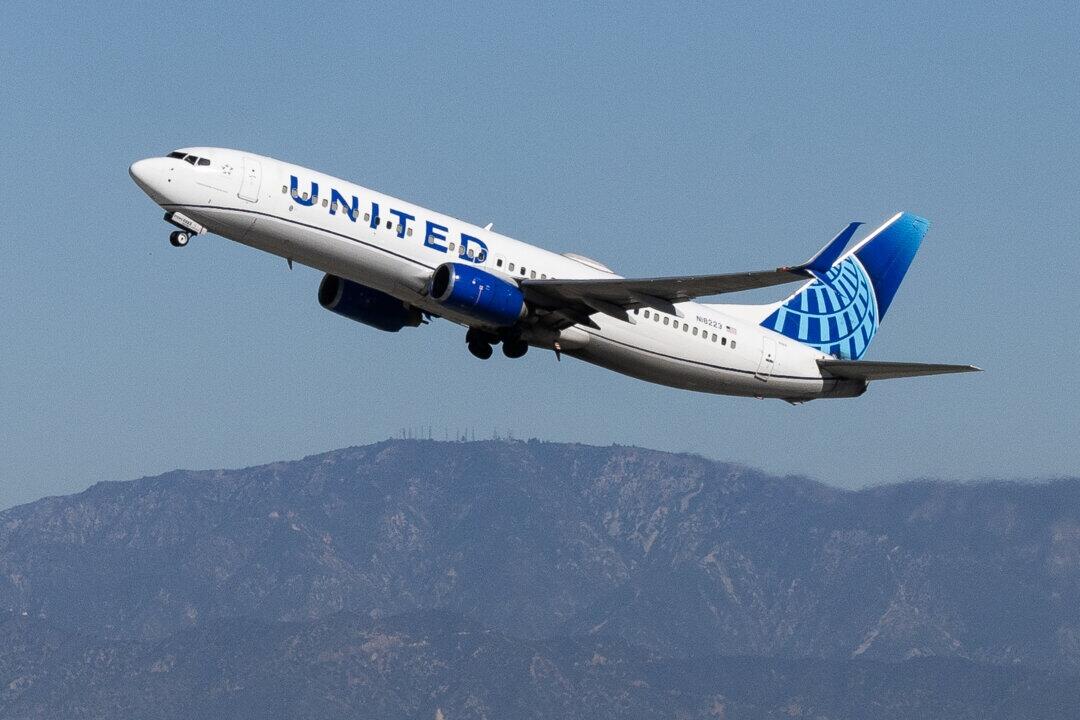
Image via ZeroHedge
United moves to block AI agents from booking flights
United Airlines is moving to ban the use of AI agents that book flights for customers, aiming to restrict automated tools interacting with its booking systems. The push reflects growing airline unease with bot-driven shopping and transactions that can spike traffic, scrape fares, or create messy edge-case bookings.
The fight isn’t really about “AI” as a concept; it’s about control of distribution, fraud risk, chargebacks, and customer service costs when an automated middleman gets it wrong. If other airlines follow, the next battleground will be whether they offer approved APIs for legitimate assistants or simply wall off the front door.
▪ The Bottom Line: Airlines aren’t wrong to protect systems and reduce abuse, but blanket bans are the lazy version of governance. If AI agents are the new travel agents, the adult solution is authenticated access, rate limits, and clear liability rules, not whack-a-mole enforcement. Consumers will end up with fewer tools and higher friction unless airlines provide a sanctioned lane.
China warns Washington against new AI chip restrictions
China warned the United States against imposing additional export controls on AI chips, signaling fresh friction in the tech trade war. Beijing has increasingly treated advanced semiconductors as a national security and economic growth red line.
More curbs would tighten pressure on Chinese AI development and on global chip supply chains, while also forcing U.S. firms to navigate shrinking markets and more compliance headaches. The near-term risk is another tit-for-tat cycle: tighter U.S. rules, louder Chinese retaliation threats, and more incentive for parallel tech stacks.
▪ The Bottom Line: Export controls can slow adversaries, but they also accelerate domestic substitution and harden blocs. Washington should be clear-eyed: targeted controls with allied coordination are defensible; sprawling restrictions that punish U.S. companies and allies’ supply chains are self-defeating. Expect “chips” to remain the lever both sides keep pulling because it’s one of the few that actually moves outcomes.
Indonesia’s wiretapping scandal exposes a security-state power struggle
A wiretapping scandal in Indonesia is widening into a political fault line, with senior police officers accused of illegally monitoring President Prabowo Subianto. The allegations point to rival networks inside the security establishment and revive long-running concerns about surveillance and accountability.
The immediate stakes are internal: who controls intelligence flows, who gets purged, and whether the government tightens or reforms oversight. The broader signal is institutional credibility; investors and partners watch stability, but they also watch whether rule of law is real or optional when security services are involved.
▪ The Bottom Line: When security institutions start spying up the chain, it’s not just scandal—it’s governance breakdown. Indonesia needs stronger oversight and clear consequences, because “security” without boundaries becomes political weaponry fast. Prabowo can use this moment to centralize power or to professionalize institutions; one path builds trust, the other builds fear.
📎 DW
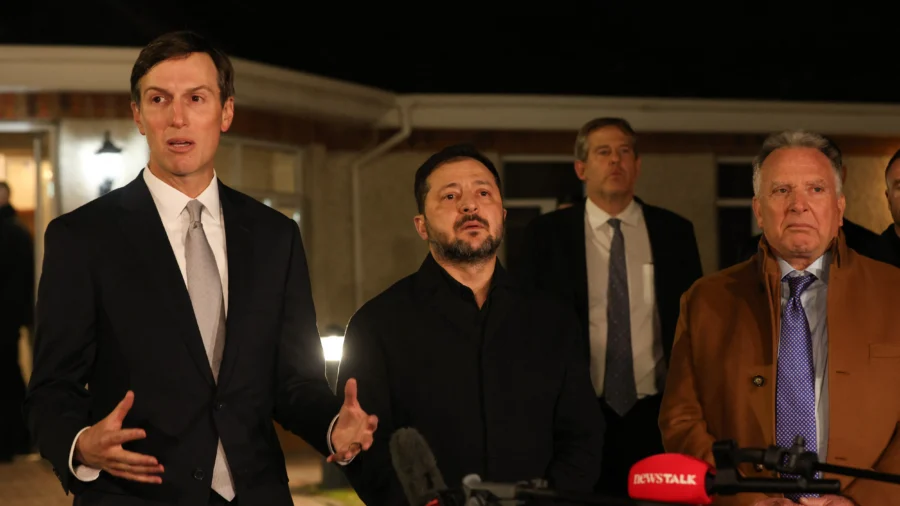
Image via NTD
U.S. envoys see Putin, then meet Zelenskyy in Dublin
U.S. envoys met with Ukraine’s President Volodymyr Zelenskyy in Dublin after previously meeting with Russia’s President Vladimir Putin in Moscow. The sequence underscores an active backchannel-style push, with Washington figures trying to probe what each side would accept.
The optics matter: Ukraine wants assurances it’s not being negotiated over, while Russia benefits from any signal that talks could ease pressure. What comes next is whether these meetings produce concrete frameworks—ceasefire parameters, security guarantees, aid timelines—or simply headlines and ambiguity.
▪ The Bottom Line: Talking is fine; freelancing is not. If envoys are going to bounce between Moscow and Kyiv, the U.S. message must be disciplined: no carve-up, no reward for aggression, and no vague promises that evaporate at the first political bump. The only leverage that works with Putin is unity and durability—anything else is just theater.
📎 NTD
That’s the day: one outage reminder, one AI gatekeeping move, and the usual high-stakes chessboard. See you Monday.
— Daily Recap Editorial