With government debt soaring and inflation still biting, smart investors aren't waiting for volatility to hit — they're preparing now. The Gold Wealth Blueprint breaks down exactly how gold has historically shielded portfolios during periods of fiscal strain and market uncertainty.
Inside, you'll discover why gold moves differently than paper assets, how to use it as a practical hedge, and how to size your exposure without overcommitting. It's concise, actionable, and free — but don't sit on it.
Get the Free Gold Wealth BlueprintBy following the link above, you're choosing to opt in to receive insightful updates from Investor News + 2 free bonus subscriptions. Your privacy is important to us. You can unsubscribe anytime. See our privacy policy for details.

Thursday, July 9, 2026: Trade threats hit Europe, strategists reset expectations, a Maine Democrat exits, and Iran tensions spike again.

Image via Axios
Trump floats cutting off trade with Spain, and Europe hears the warning loud and clear
President Trump said he could "cut off all trade" with Spain, a threat that quickly registered as a market-moving headline in Europe. Investors treated it less like rhetoric and more like a reminder that tariff risk can reappear overnight.
The immediate takeaway: even if policy doesn’t change tomorrow, the cost of uncertainty shows up fast in currencies, exporters, and Europe-facing multinationals. For businesses, the signal is that political leverage is still being routed through trade, with Spain now in the crosshairs.
Source: Axios
Read the full story at Axios →

Image via MarketWatch
Schwab: The easy index era is over, and investors should act like it
Charles Schwab strategists warned investors that the old playbook of effortless broad-index gains is fading, replaced by higher geopolitical risk, more frequent supply shocks, and choppier macro conditions. In their view, the next stretch looks less like a smooth bull run and more like a market that demands selectivity.
That shift matters because volatility changes what gets rewarded: pricing power, resilient balance sheets, and durable cash flows tend to matter more when inflation, rates, and geopolitics refuse to stay quiet. It’s also a warning shot to anyone counting on the market to bail out weak strategy with a rising tide.
Source: MarketWatch
Read the full story at MarketWatch →
Maine Senate race jolts as Democratic nominee exits after assault allegation
Democratic nominee Graham Platner said he is dropping out of Maine’s critical Senate race after being accused of sexual assault, an allegation he denies. The exit throws the contest into rapid reset mode as party leaders and donors scramble to stabilize the ticket.
In practical terms, the clock is now the main enemy: ballot logistics, fundraising, and voter outreach all compress when a nominee leaves midstream. The outcome could reshape control math in a Senate map where a single seat can decide committee gavels and confirmations.
Source: TODAY (NBC News)
Read the full story at TODAY (NBC News) →
Trump says Iran "wants to make a deal" as strikes resume after talks collapse
The U.S. and Iran exchanged a new round of strikes after negotiations fell apart, raising the temperature across the region. President Trump said Iran reached out and "wants to make a deal so badly," even as military action continued.
The key point for markets and allies is the dual-track reality: diplomacy can restart quickly, but the baseline level of kinetic risk has risen, which affects shipping, energy pricing, and regional force posture. What to watch next is whether backchannel contact produces a pause—or whether the next incident hardens positions further.
Source: CBS News
Read the full story at CBS News →
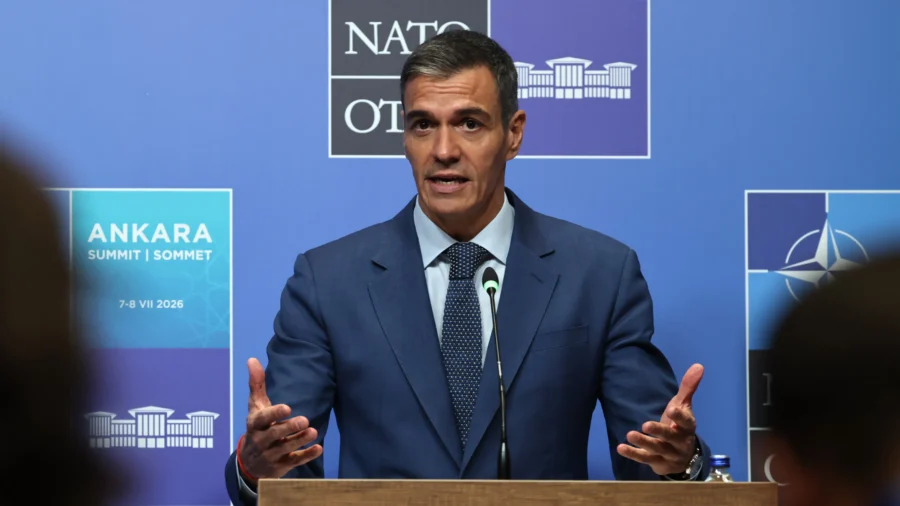
Image via NTD
Trump says Spain agreed to higher defense spending, sharpening the NATO pressure campaign
President Trump said Spain agreed to increased defense spending, framing it as progress on burden-sharing within NATO. The claim follows renewed U.S. pressure on allies to raise outlays as security demands expand and budgets tighten.
If Spain actually lifts spending targets, it becomes both a precedent and a test case: other capitals will be asked why they can’t match it, and domestic politics will decide how fast it happens. The near-term watch is whether Madrid confirms details and timelines—or whether the dispute shifts back to trade and tariffs.
Source: NTD
That’s the day: less certainty, more leverage politics, and faster consequences. See you tomorrow.
— Daily Recap Editorial